Get our FREE 30-Minute Weeknight Recipes E-book!Grab it
Back to all posts
Recipes

No-Fuss Sourdough for Absolute Beginners

No shaping gymnastics and no schedule to babysit — mix it after dinner, bake it before lunch.

No-Fuss Sourdough for Absolute Beginners

Prep time

20 min

Cook time

45 min

Serves

1 large loaf

Ingredients

Step-by-Step Instructions

Follow along photo by photo — every stage below shows exactly what to look for before you move on.

  1. Flour and water being mixed in a large bowl
    Step 130 minutes

    Mix flour and water, then walk away

    Stir the flour and water together until no dry patches remain — it will look rough and shaggy, which is fine — then cover the bowl and leave it for thirty minutes.

    This rest, called an autolyse, lets the flour drink up the water and begin forming gluten with no kneading at all. It is the reason this recipe needs no machine and no stretching gymnastics later on.

  2. Hands working sourdough dough in a bowl
    Step 25 minutes

    Add the starter and salt

    Add the active starter and the salt, then squeeze the dough repeatedly between your fingers until both disappear completely. It will feel unpleasantly sticky for the first minute and then suddenly come together — keep going until it does.

    Your starter should be at its peak: doubled, domed and smelling sweet rather than sharply acidic. A tablespoon dropped into water should float. If it sinks, feed it and wait a few hours.

    Tip · Wet your hand before squeezing the dough; the dough sticks to dry skin far more than to damp skin.

  3. Dough being folded on a floured surface
    Step 32 hours, then overnight

    Fold four times, then leave it overnight

    Every thirty minutes, wet a hand, reach under one edge of the dough, stretch it up and fold it over the centre. Rotate the bowl and repeat four times. Do this in four sessions, then stop.

    Cover and leave at room temperature overnight. By morning the dough should have risen by about half, feel airy and jiggly, and show a few bubbles across the surface. A cold kitchen simply means a longer wait — go by the look, not the clock.

  4. Shaped dough round dusted with flour
    Step 41 hour

    Shape into a round and chill

    Tip the dough onto a lightly floured counter and pull the edges into the middle to build tension, then flip it seam-side down and drag it in a circle to tighten the surface.

    Place it seam-side up in a banneton or a bowl lined with a floured tea towel — rice flour is best as it does not absorb moisture — and chill for at least an hour. Cold dough scores cleanly and holds its shape in the pot.

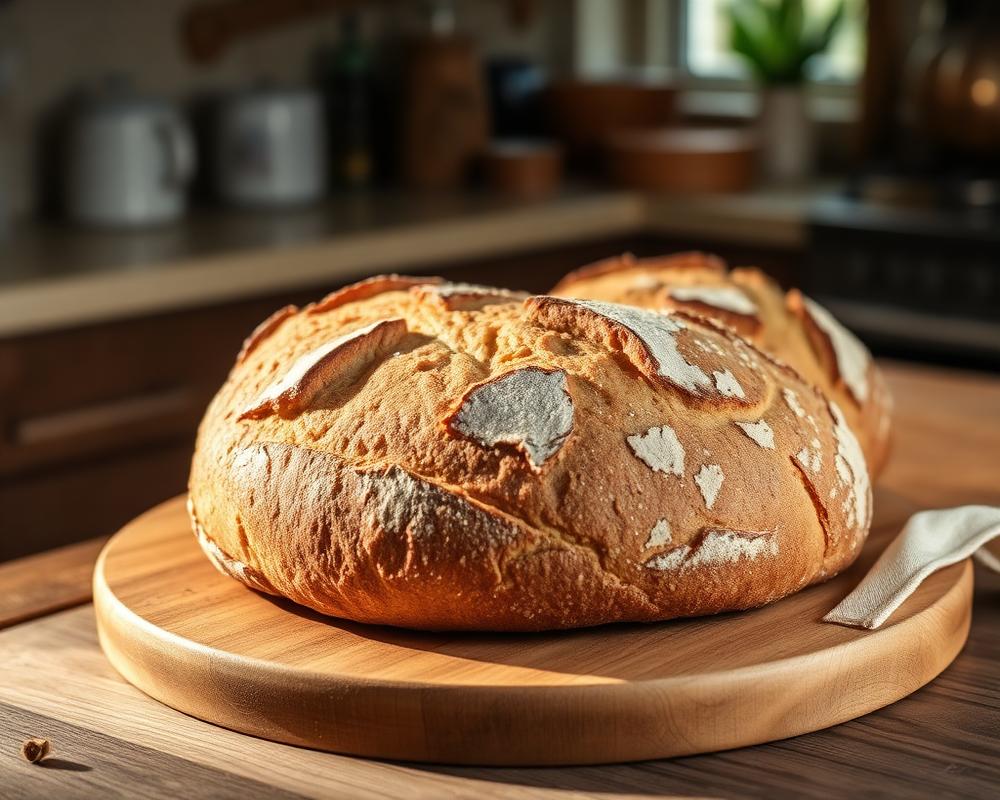
  5. Crusty sourdough loaf lifted from a dutch oven
    Step 545 minutes

    Bake covered, then uncovered until bronzed

    Preheat the covered pot at 250°C (480°F) for half an hour. Turn the loaf out onto parchment, score it once with a decisive slash about a centimetre deep, and lower it in with the lid on.

    Bake twenty-five minutes covered, so the trapped steam keeps the crust soft and lets the loaf spring, then twenty minutes uncovered to colour it. Go darker than feels comfortable — that deep bronze is flavour. Cool on a rack for a full hour before cutting.

    Tip · Slicing a hot loaf gums the crumb. If you can hear it faintly crackling, it is still setting.